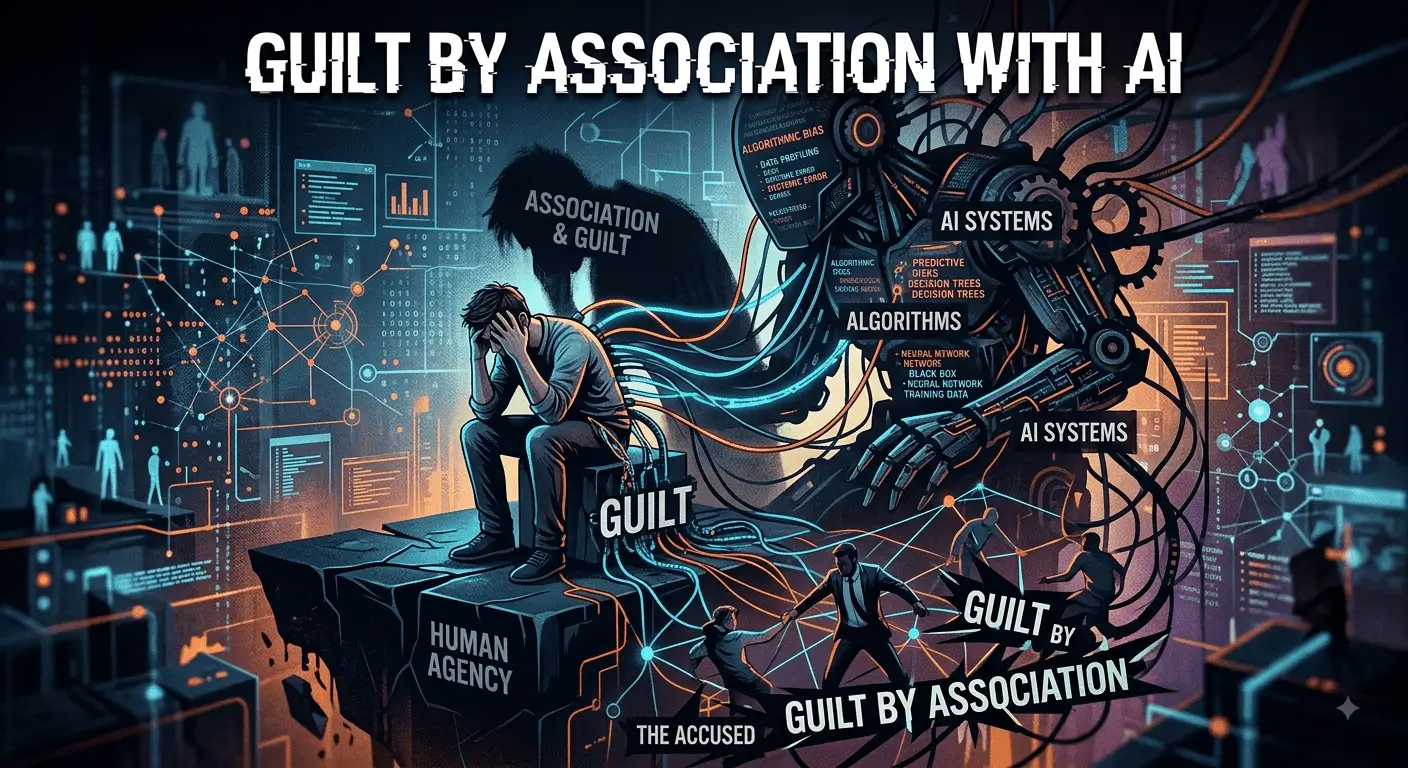
Guilt by Association with AI
Short Description : -
The Rise of Artificial Intelligence in Everyday Life
Full Description : -
Menttora: Academy for Professional Development (Founder/CEO)
Artificial intelligence (AI) continues to
transform both personal and professional lives around the world. From helping a
best man draft a memorable speech, to assisting students with research ideas,
to supporting professionals in preparing polished reports and presentations, AI
has become an increasingly valuable tool. There is little doubt that AI has
improved efficiency, accessibility, and productivity across countless domains.
As AI becomes more ubiquitous,
organizations and industries are rapidly developing policies governing its use.
Some institutions are exploring how and when AI should be used, while others
have implemented complete bans. University professors are being challenged to
develop creative methods for assessing student work in an era of AI-assisted
learning, while students increasingly view AI as an indispensable resource.
Complicating matters further is the
unprecedented pace of AI advancement. Systems that were criticized yesterday
for inaccuracies and inefficiencies often improve dramatically overnight. As a
result, organizations are continually revising and refining their AI policies
in an attempt to keep pace with evolving technologies.
AI and the Legal Profession
One profession currently grappling with AI
integration is the legal field. The legal profession has historically embraced
technological advancements to improve efficiency and service delivery.
Electronic signatures, digital filing systems, legal research databases, and
case management software have become commonplace in modern law offices.
However, a profession built upon precision
and the avoidance of errors and omissions faces unique challenges when adopting
AI. Recent events have generated significant discussion regarding AI-assisted
legal research, particularly instances where lawyers have cited fictitious case
law generated by AI systems.
Between January 1, 2024, and April 13,
2026, Canadian courts and tribunals reportedly flagged at least 249 fictitious
case citations across 138 decisions involving 45 different courts and tribunals
nationwide. In approximately 74 percent of those decisions, courts found or
presumed that AI tools had generated the fictitious authorities. The trend is
concerning: seven decisions in 2024, 80 in 2025, and 51 in the early months of
2026.
Institutional responses have largely
focused on human accountability. Lawyers have been sanctioned for submitting
fabricated authorities, self-represented litigants have faced penalties for
relying on AI-generated information without verification, and judges have
increasingly been tasked with identifying errors that parties failed to detect.
Yet despite directives, rules, and sanctions, the trend persists.
The Purpose of This Discussion
The purpose of this article is not merely
to highlight a growing challenge within legal practice, but rather to explore
how professionals can use AI safely, responsibly, and ethically.
There should be no stigma attached to the
use of AI. Artificial intelligence has unquestionably made many tasks more
manageable and efficient. Eliminating AI from professional practice—including
the legal profession—may ultimately reduce competitiveness in an increasingly
technology-driven environment.
The question, therefore, is not whether
professionals should use AI, but how they should use it.
Expedience, Eloquence, and Risk
The use of AI in legal research, writing
briefs, and preparing factums is often driven by two factors: expedience and
eloquence. Practitioners seek efficient ways to identify persuasive authorities
and craft compelling arguments capable of influencing judicial decision-making.
However, this pursuit of efficiency has, in
some cases, led professionals into difficult and embarrassing situations where
their competence and integrity have been questioned. The repercussions extend
beyond individual cases, sometimes creating the perception that simply using AI
constitutes professional deviance.
This raises an important question: Has the
profession become guilty by association with AI?
Understanding "Guilty by
Association" in the AI Era
"Guilty by association" refers to
the assumption that an individual is morally or professionally responsible for
wrongdoing because of the people, groups, or entities with which they
associate, rather than because of their own actions.
By extension, some may argue that merely
using AI in legal practice is sufficient to establish such an association. Yet
this perspective oversimplifies a far more nuanced issue.
The reality is that responsibility in
AI-assisted work remains shared. Professionals who rely on AI without
exercising independent judgment, verification, and due diligence become the
primary actors responsible for any resulting errors. Blind trust in AI can
create professional liability and reputational harm.
At the same time, AI developers and
companies also bear responsibility. When AI systems generate inaccurate or
fabricated information without sufficient safeguards or warnings, they
contribute to the risk of misuse. However, AI remains a tool—not a substitute
for professional judgment.
Ultimately, accountability rests with the
user. AI may assist in generating information, but professionals remain
responsible for validating facts, confirming authorities, and ensuring the
accuracy of their work.
Education: The Key to Responsible AI Use
Education is the key to navigating the fine
line between innovation and risk. Professionals need to understand when AI is
appropriate, where its limitations exist, and how it can be integrated
ethically into practice.
Training on the various forms of AI, their
capabilities, and their risks is no longer optional—it is becoming essential.
AI is not a passing trend; it is a transformative technology that has the
potential to enhance efficiency, improve service delivery, and increase
competitiveness across industries.
For the legal profession and other sectors
alike, organizations must move beyond merely creating AI policies and begin
investing in AI literacy and practical training. Staff must learn how to use AI
safely, protect confidential information, verify outputs, recognize
hallucinations, and comply with professional and ethical obligations.
As artificial intelligence continues to
evolve, organizations across the legal profession and other industries must
move beyond simply asking whether AI should be used and instead focus on how it
can be used responsibly. Investing in AI literacy, governance, and best
practices is becoming increasingly important to ensure ethical use, protect
confidential information, and maintain professional standards. Organizations
that proactively educate their workforce and develop sound AI policies will be
better positioned to harness the benefits of AI while mitigating its risks.
Menttora: Academy for Professional
Development supports organizations in navigating
this rapidly changing landscape by providing education on AI, facilitating
discussions on responsible use, and assisting with the development of policies
and best practices tailored to professional environments. Whether in law,
education, human services, government, or the private sector, Menttora helps
organizations build the knowledge and frameworks necessary to integrate AI
thoughtfully, ethically, and safely into their operations.


Comments (0)
No comments yet. Be the first to comment!